
Why the Industry Moved from Epoxy Mortar to Urethane Cement Flooring (And Why Some Specs Haven’t Caught Up)

Sumind

Post Summary

What is the fundamental difference between epoxy mortar and urethane cement flooring systems?

Both systems share the same finish layers — an epoxy grout coat to seal the mortar surface and a urethane topcoat for UV stability, chemical resistance, and wear. The critical difference is in the body coat — the structural mortar layer that forms the bulk of the system’s thickness and determines how it responds to thermal cycling, moisture, and mechanical stress. Epoxy mortar uses an epoxy resin binder with graded silica or quartz aggregate, applied at three-sixteenths to one-quarter inch thickness, producing a rigid high-compressive-strength system at 10,000 plus psi with decades of documented performance data. Urethane cement uses a hybrid urethane-cementitious binder with aggregate, applied at one-quarter to three-eighths inch thickness through a gauge rake and seeded broadcast method, with denser resin content than traditional trowel-down systems. The binder chemistry is fundamentally different, and that chemistry difference determines how each system responds to the conditions that cause epoxy mortar to fail in wet industrial environments.


Why does epoxy mortar fail under thermal shock and why does urethane cement handle it differently?

Thermal shock failure in epoxy mortar traces to a chemistry-driven physics problem — epoxy has a coefficient of thermal expansion significantly different from concrete. When a food processing facility runs a 180-degree Fahrenheit hot water washdown on a slab that was at 35 degrees an hour earlier, the epoxy mortar layer and the concrete substrate want to expand and contract at different rates. The differential movement concentrates stress at the bond line between the coating and the concrete — and over repeated thermal cycles, that stress accumulates into cracking, disbondment, and eventually full delamination. Urethane cement’s cementitious component gives it a thermal expansion coefficient much closer to concrete, so the mortar and the slab move together rather than against each other. This compatibility allows urethane cement to handle sustained temperatures from well below zero to 250 degrees Fahrenheit and above, and to withstand direct steam cleaning without the bond failure that the same conditions reliably produce in epoxy mortar systems.


How does moisture tolerance differ between epoxy mortar and urethane cement and why does it matter for project scheduling?

Epoxy is a film-forming resin that acts as a vapor barrier once cured — which creates a fundamental problem when installed over concrete with any meaningful moisture vapor transmission. Moisture vapor from the slab builds pressure beneath the epoxy film and pushes it off the substrate, producing the blistering and delamination that appear to develop suddenly but have been building since the day of installation. Addressing this with epoxy mortar requires either waiting months for the slab to dry sufficiently or installing a moisture mitigation system — both adding time and cost to the project. Urethane cement’s cementitious component is compatible with substrate moisture by chemistry, allowing installation on green concrete at elevated moisture vapor emission rate numbers where epoxy mortar would fail. This moisture tolerance compresses project schedules dramatically in new construction and renovation projects where concrete moisture cannot be eliminated on the timeline the project requires.


Why do Army Corps of Engineers and DOD specifications still call for epoxy mortar systems when the commercial market has largely moved to urethane cement?

The disconnect between government specifications and current commercial practice is not a quality judgment about epoxy mortar — it is a specification inertia problem. The Unified Facilities Guide Specifications, specifically UFGS 09 67 23.16 covering fuel-resistive resinous flooring, were written around epoxy mortar performance data that spans decades. The UFGS update cycle is slow and conservative, and the specification language was developed by people working from documented epoxy mortar performance rather than from the field failure data that the commercial flooring industry has accumulated over the past 15 to 20 years in wet industrial environments. The epoxy mortar specification performs acceptably in climate-controlled spaces with dry slabs and stable temperatures — the conditions that many of its documented installations operated under. The problem is that the Corps applies it broadly, including to kitchens, vehicle maintenance facilities, and industrial spaces where thermal shock and moisture are real operating conditions, and that is where the spec produces predictable failures that the specification’s authors did not anticipate when it was written.


Which industries and applications have driven the commercial market’s adoption of urethane cement and what did their collective field experience reveal?

Food and beverage was the first sector to move almost entirely to urethane cement, driven by the daily hot water and steam washdown protocols that food safety regulations require and that epoxy mortar consistently fails under. Pharmaceutical manufacturing followed, motivated by the same thermal shock demands from CIP cleaning protocols combined with the regulatory scrutiny that pharmaceutical flooring failures attract. Brewery, dairy, and beverage operations adopted urethane cement for the combination of organic acid exposure, thermal cycling between cold production and hot CIP cleaning, and the need for seamless surfaces that pass health inspection. Chemical processing facilities made the switch for broader chemical resistance against the solvent and acid profiles that standard epoxy mortar cannot withstand long-term. The pattern across all sectors is consistent: when a floor must survive a decade of daily hot washdowns, broad chemical exposure, or wet production conditions, epoxy mortar does not hold up regardless of its compressive strength rating on the specification sheet.

A Technical Deep Dive for Facility Managers and Specifiers

If you’ve reviewed flooring specifications for industrial, food processing, or Department of Defense facilities recently, you may have noticed something puzzling: some government specs—particularly DOD and Army Corps of Engineers specifications—still call for epoxy mortar systems that most experienced flooring contractors stopped recommending years ago.

The disconnect isn’t about quality—it’s about specification inertia. Let’s break down why the commercial flooring industry has largely moved to urethane cement systems, and what that means for your next project.

The Systems Side by Side

Both epoxy mortar and urethane cement systems share the same finish layers: an epoxy grout coat to fill and seal the mortar surface, then a urethane topcoat for UV stability, chemical resistance, and wear. The critical difference is in the body coat—the structural mortar layer that does the heavy lifting.

Epoxy Mortar (Trowel-Down)

  • Epoxy resin binder with graded silica or quartz aggregate
  • Typical thickness: 3/16″ to 1/4″
  • Rigid, high-compressive-strength system (10,000+ psi)
  • Decades of documentation and testing data

Urethane Cement (Urethane Mortar)

  • Hybrid urethane-cementitious binder with aggregate
  • Typical thickness: 1/4″ to 3/8″
  • Installation method: gauge raked, then seeded (broadcast with quartz) to build thickness
  • Denser resin content than traditional trowel-down systems
  • Fundamentally different binder chemistry
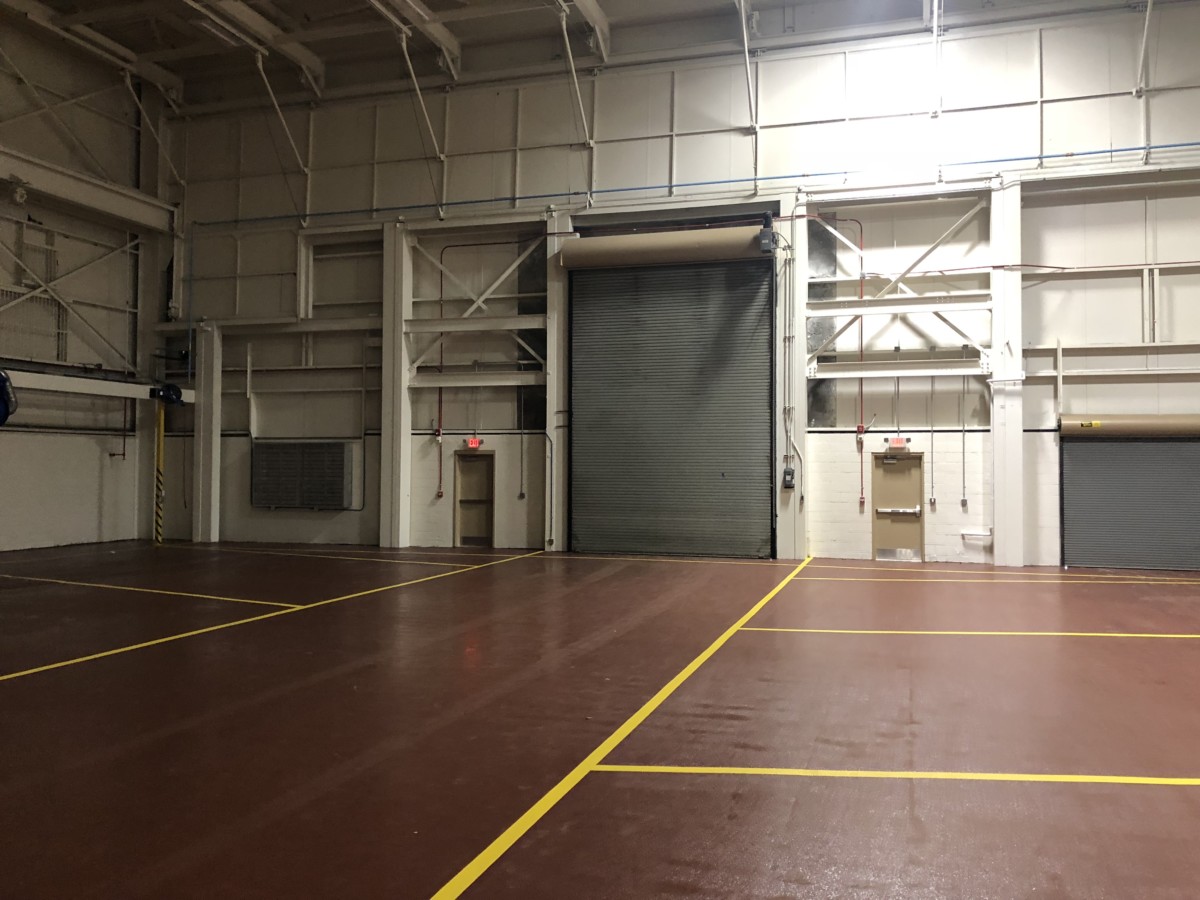
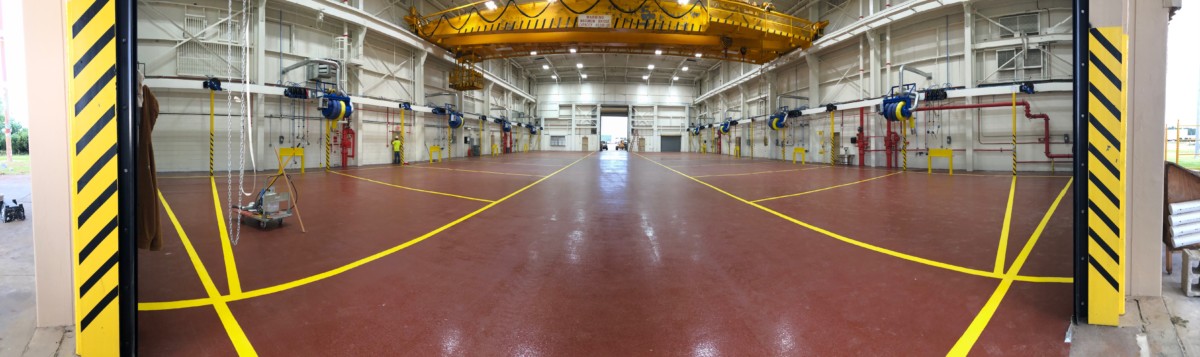
Urethane cement flooring in military vehicle maintenance facility
The finished urethane cement system—built to handle thermal shock, moisture, and heavy equipment traffic

Where Epoxy Mortar Breaks Down

The shift to urethane cement happened because epoxy mortar’s weaknesses show up exactly where modern facilities punish floors the hardest:

1. Thermal Shock and Cycling

This is the big one. Epoxy is rigid and has a coefficient of thermal expansion significantly different from concrete. When a food plant runs a 180°F hot water washdown on a slab that was at 35°F an hour ago, the epoxy mortar and the concrete want to move at different rates.

Over repeated cycles, that stress concentrates at the bond line. The result: cracking, disbondment, and eventually wholesale delamination.

Urethane cement’s cementitious component gives it a thermal expansion coefficient much closer to concrete—the mortar and the slab move together. These systems handle sustained temperatures from well below zero up to 250°F+ and can take direct steam cleaning without flinching.

2. Moisture Tolerance

Epoxy is a film-forming resin. It’s effectively a vapor barrier. If the concrete has any meaningful moisture vapor transmission—and in new construction or slabs on grade, it often does—that vapor pressure builds under the epoxy mortar and pushes it off the slab.

The result: blistering, delamination, bond failure. You either wait months for the slab to dry, or you install a mitigation system. Both cost time and money.

Urethane cement is moisture-tolerant by chemistry. The cementitious component is compatible with moisture in the substrate. You can install on green concrete at elevated MVER numbers where epoxy would fail. That alone compresses project schedules dramatically.
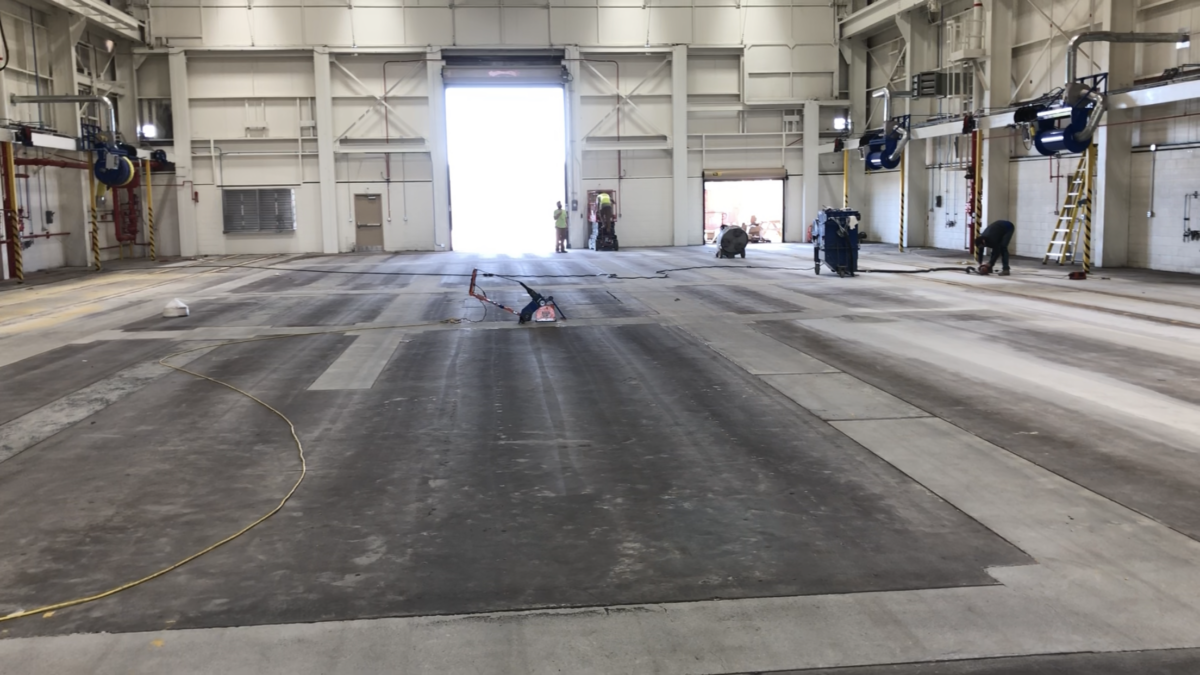
Surface preparation at Naval Weapons Station Charleston before urethane cement installation
Surface preparation at Naval Weapons Station Charleston—proper prep is critical regardless of which system you choose

3. Return to Service

Urethane cement systems generally cure faster and allow earlier return to traffic. For retrofit work where downtime is the most expensive variable, this matters enormously.

4. Chemical Resistance Profile

Both systems offer good chemical resistance, but urethane cement tends to handle a broader range of organic acids, hot caustics, and CIP chemicals—the substances that actually hit floors in food & beverage, pharmaceutical, and chemical processing environments.

The Army Corps of Engineers Specification Problem

The Unified Facilities Guide Specifications (UFGS) are the standard specs used for Department of Defense construction. UFGS 09 67 23.16 covers fuel-resistive resinous flooring with a five-coat epoxy mortar system.

On paper, the spec looks great. The data set goes back decades. The language was written around well-documented epoxy mortar performance.

The problem? The UFGS update cycle is slow and conservative. The epoxy mortar spec has a massive installed base and decades of documentation. The people writing those guide specs are often a generation removed from what the specialty flooring industry has learned in the field over the last 15–20 years.

The epoxy mortar system isn’t wrong for every application—it works fine in conditioned spaces with stable temperatures and dry slabs. But the Corps applies it broadly, including to kitchens, vehicle maintenance facilities, and industrial spaces where thermal shock and moisture are real concerns. That’s where the spec stops making sense.

What the Commercial Market Learned

The commercial and industrial market figured this out years ago:

  • Food and beverage was the first sector to move almost entirely to urethane cement
  • Pharmaceutical followed, driven by sanitation requirements and thermal cycling from washdowns
  • Brewery and distillery operations adopted urethane cement for the same reasons
  • Chemical processing made the switch for broader chemical resistance

The pattern is clear: when your floor has to survive a decade of daily hot washdowns, epoxy mortar simply doesn’t hold up. No amount of compressive strength data on a spec sheet changes that.

What This Means for Your Project

If you’re specifying flooring for an industrial facility, consider the real-world conditions:

Epoxy mortar may still work for:

  • Climate-controlled spaces
  • Dry environments
  • Areas without thermal cycling
  • Applications where the spec is mandated and can’t be modified

Urethane cement is typically the better choice for:

  • Food processing and production areas
  • Pharmaceutical manufacturing
  • Brewery, dairy, and beverage facilities
  • Commercial kitchens
  • Vehicle maintenance areas
  • Any space with regular washdowns
  • New construction on green concrete

The Bottom Line

Same topcoat system, but the urethane cement mortar bed is a better-engineered match to concrete’s behavior under thermal and moisture stress. The epoxy mortar is a legacy system that still gets specified because the spec language hasn’t caught up to field performance data.

Any contractor who’s torn out a failed epoxy mortar in a food plant and replaced it with urethane cement understands the shift intuitively. The chemistry tells the story that decades of field failures made impossible to ignore.


Summit Industrial Flooring has installed millions of square feet of resinous flooring across Ohio, South Carolina, and North Carolina—including urethane cement systems at Naval Weapons Station Charleston and other DOD facilities. Contact us for a technical consultation on your next flooring project.

References:

  • UFGS 09 67 23.16: Fuel Resistive Resinous Flooring, 5-Coat System
  • UFGS 09 67 23.13: Standard Resinous Flooring
  • Whole Building Design Guide (WBDG) Unified Facilities Guide Specifications

Key Points

What is specification inertia and why does it produce dangerous gaps between written standards and field-proven performance in industrial flooring?

  • Specification inertia is the condition where written standards lag behind field performance knowledge by years or decades — not because the specification authors are incompetent, but because the institutional update process for major specifications is slower than the rate at which field failures accumulate and the industry learns from them.
  • The UFGS update cycle for Department of Defense construction standards is deliberately conservative — the validation and approval process for specification changes in a major government standard requires documentation, review, and committee approval that can take years. By the time field failure data has been documented, analyzed, peer-reviewed, and submitted through the appropriate channels, the industry has often moved on to the next generation of solutions.
  • The documentation advantage of legacy systems perpetuates their specification even when newer systems have better field performance records. Epoxy mortar has decades of installation data, compressive strength test results, and documented applications that urethane cement — which has been in widespread commercial use for a shorter period — cannot yet match in volume even when its field performance in demanding environments is clearly superior.
  • The people writing guide specifications are often a generation removed from current field practice — architects, engineers, and specification writers who learned to specify epoxy mortar systems when those systems were the best available option may not have firsthand experience with the failure patterns that field installers have observed repeatedly over the past 15 to 20 years in food processing and pharmaceutical environments.
  • The consequence of specification inertia is not academic — it is concrete and costly. Facilities built or renovated to outdated specifications install systems that fail on predictable timelines, producing delamination, inspection failures, production shutdowns, and replacement costs that the correct specification would have prevented from the start.
  • Summit Industrial Flooring’s work at DOD facilities including Naval Weapons Station Charleston provides direct experience navigating the gap between government specification requirements and current best-practice system performance — including the technical consultation that helps facility managers understand when specification language can be modified and what the technical justification for modification requires.

How do the thermal expansion coefficients of epoxy mortar and urethane cement create fundamentally different performance outcomes in wet industrial environments?

  • Thermal expansion coefficient compatibility between the floor coating and the concrete substrate is the physics variable that determines whether a floor coating survives repeated thermal cycling — not compressive strength, not chemical resistance ratings, and not application thickness. A coating that expands and contracts at a different rate than the concrete it is bonded to accumulates stress at the bond line with every thermal cycle.
  • Epoxy resin’s coefficient of thermal expansion is significantly higher than concrete’s — when temperature changes, epoxy wants to move more than the concrete beneath it. In a conditioned space with stable temperatures, this difference is inconsequential because thermal cycling is minimal. In a food processing facility with daily 180-degree washdowns on a slab that cools to near-ambient overnight, this difference becomes a fatigue failure mechanism that operates every single day.
  • The bond line stress accumulates rather than dissipating — each thermal cycle does not simply reverse the stress from the previous one but adds to it in ways that gradually weaken the adhesive bond between the epoxy mortar and the concrete substrate. The delamination that appears after one or two years of operation is not a sudden failure; it is the visible result of stress accumulation that began with the first hot washdown.
  • Urethane cement’s cementitious component gives it a thermal expansion coefficient that is much closer to Portland cement concrete — the material it is bonded to. When temperature changes, the urethane cement mortar and the concrete slab move at similar rates, reducing the differential stress at the bond line to levels that the adhesive bond can sustain across years of thermal cycling.
  • The practical consequence of this chemistry difference is not subtle — it is the difference between a floor that performs for a decade in a food processing environment and one that delaminates within two years under the same operating conditions. The compressive strength numbers on an epoxy mortar specification sheet describe a performance characteristic that is irrelevant when the system is failing in tension at the bond line under thermal stress.
  • Summit Industrial Flooring has replaced failed epoxy mortar systems with urethane cement in food processing, pharmaceutical, and wet industrial environments across Ohio, South Carolina, and North Carolina — providing direct before-and-after experience that connects the chemistry difference to the performance outcome in the specific facility types where the distinction is most consequential.

What moisture-related failure mechanisms affect epoxy mortar systems and how does urethane cement’s chemistry address each?

  • Vapor pressure beneath epoxy mortar is the moisture failure mechanism that most surprises facility managers because it operates invisibly — the blistering and delamination that appear at the surface have been building since the day of installation as moisture vapor from the concrete slab accumulates beneath the epoxy film at pressure that gradually overcomes the adhesive bond.
  • Epoxy’s film-forming chemistry creates an effective vapor barrier when cured — which is a performance advantage in chemical resistance applications but a structural liability when the substrate beneath it is releasing moisture vapor. The barrier that keeps chemicals out also keeps moisture vapor in, and the pressure it generates has nowhere to go but through the bond between the coating and the concrete.
  • New construction concrete contains significant moisture from the hydration process that takes months to years to dissipate to levels compatible with epoxy mortar installation. On grade slabs that remain in contact with soil moisture, vapor transmission may never reach the low levels that epoxy mortar requires — making the waiting-for-concrete-to-dry approach a project timeline problem that has no reliable solution in certain installation contexts.
  • Moisture mitigation systems — vapor barriers and moisture-mitigating primers — address the epoxy mortar moisture compatibility problem at added cost and project time. The mitigation system installation adds a project phase that the correct system specification would not require, and its long-term effectiveness depends on the quality of its installation in ways that add a new failure point to the floor system.
  • Urethane cement’s cementitious component is chemically compatible with substrate moisture because cement and water are the fundamental reaction pair in cement chemistry — the binder that holds the urethane cement mortar together is not repelled by moisture in the substrate but is compatible with it by design. This allows installation on concrete at moisture levels that would cause immediate or eventual failure in epoxy mortar systems.
  • The project scheduling consequence of this moisture tolerance is significant in new construction where concrete pour schedules drive the overall project timeline. Urethane cement installation can proceed on a schedule that the concrete pour-to-finish timeline supports; epoxy mortar installation must wait for moisture levels that the concrete may not reach within the project’s construction window — a sequencing problem that urethane cement’s chemistry eliminates entirely.

How should facility managers and specifiers navigate projects where legacy specifications call for epoxy mortar but urethane cement is the better-performing choice?

  • The first step is understanding whether the specification can be modified and under what authority. Government construction projects with UFGS specifications may allow or require a formal specification deviation or substitution request that documents the technical basis for the alternative system — a process that Summit Industrial Flooring’s DOD facility experience informs directly.
  • Technical documentation supporting the substitution request must address the specific performance advantages of urethane cement relative to epoxy mortar for the actual operating conditions of the facility — thermal cycling data, moisture tolerance testing, chemical resistance comparisons, and field performance references from comparable facilities in comparable operating environments all contribute to a substitution case that review authorities can evaluate on technical merit.
  • Climate-controlled spaces with dry slabs and stable temperatures are the applications where the technical case for epoxy mortar substitution is weakest, because these are the conditions under which epoxy mortar performs acceptably and where the performance advantages of urethane cement are least consequential. Specification compliance in these contexts produces functional floors without the failure modes that make urethane cement the clear choice in demanding environments.
  • Wet industrial environments, kitchen and food processing areas, vehicle maintenance facilities, and pharmaceutical spaces are the applications where the technical case for urethane cement substitution is strongest — the failure modes of epoxy mortar in these environments are documented, predictable, and expensive to remediate, while urethane cement’s performance in the same environments is verified by decades of commercial field experience.
  • Contractor selection for specification-sensitive projects requires experience with both systems and the technical knowledge to communicate the performance differences to project owners, specification reviewers, and contracting officers — not just the installation capability to apply whichever system is specified. Summit Industrial Flooring’s technical consultation capability for DOD and institutional projects reflects this communication requirement alongside the installation expertise.
  • The most effective approach for specifiers updating facility standards is incorporating field performance data from comparable facilities into the specification basis — not simply adopting urethane cement because it is newer, but documenting why the operating conditions of the specific facility type make urethane cement’s performance characteristics more relevant than the compressive strength and documented installation base that epoxy mortar’s specification advantage rests on.

What does Summit Industrial Flooring’s DOD facility experience reveal about the practical gap between specification requirements and field performance outcomes?

  • DOD facility flooring at Naval Weapons Station Charleston and comparable installations provides Summit Industrial Flooring with direct experience at the intersection of government specification requirements and the performance conditions that military facilities actually impose — vehicle maintenance, fuel exposure, washdown protocols, and the heavy equipment traffic that DOD facility floors sustain continuously.
  • The specification compliance versus performance optimization tension in DOD work requires technical communication capability alongside installation expertise — the ability to document why a specific operating environment makes a specification modification technically justified, and to present that documentation in a form that project contracting officers and specification reviewers can evaluate and act on.
  • Installation at Naval Weapons Station Charleston under the conditions that military vehicle maintenance facilities impose — thermal cycling from outdoor exposure, fuel and lubricant spills, heavy equipment traffic, and washdown protocols — provides the reference data that distinguishes theoretical system performance from verified field performance in demanding government facility contexts.
  • The pattern of epoxy mortar failure in military facility applications where thermal and moisture conditions exceed the system’s performance envelope mirrors the pattern in commercial food processing and pharmaceutical environments — confirming that the chemistry-driven failure mechanism is not sector-specific but condition-specific, and that the DOD specification problem is a subset of the broader specification inertia problem the article addresses.
  • Summit’s position as a contractor with both DOD facility experience and commercial food processing, pharmaceutical, and industrial facility experience makes it uniquely positioned to communicate the connection between specification language and field performance in terms that both government contracting officers and commercial facility managers can understand and act on.
  • Contact Summit Industrial Flooring at sumind.com/contact-us for technical consultation on projects where specification requirements and optimal field performance diverge — including assistance with substitution documentation, system selection for specific operating conditions, and installation in Ohio, South Carolina, and North Carolina for both government and commercial industrial facility clients.

How should the epoxy mortar versus urethane cement decision be made for specific facility types and what questions should drive the specification process?

  • The operating condition analysis that should precede any body coat system specification covers four variables: the temperature range the floor will experience including washdown and process temperatures, the moisture vapor emission rate of the substrate, the chemical exposure profile including cleaning agent types and concentrations, and the return-to-service requirement that determines whether cure time is a constraint. Each variable points toward one system or the other before a single product is evaluated.
  • Daily hot water or steam washdown is the clearest single indicator that urethane cement is the correct specification — no amount of epoxy mortar installation quality or moisture mitigation investment changes the thermal expansion coefficient incompatibility that produces bond failure under repeated thermal cycling. This is a chemistry determination, not a quality control question.
  • Green concrete or slabs on grade with documented moisture vapor transmission are substrate conditions that should eliminate epoxy mortar from consideration without a moisture mitigation system — and should prompt the question of whether moisture mitigation plus epoxy mortar is a more reliable and cost-effective solution than urethane cement’s inherent moisture compatibility. In most cases, urethane cement’s moisture tolerance advantage is both technically superior and economically competitive when mitigation system cost and installation time are included in the comparison.
  • Conditioned spaces with controlled temperature, dry slabs, and no washdown protocols are the applications where epoxy mortar’s documented performance base and cost advantages make it a legitimate specification choice — the conditions under which the system works are met, and the performance case for urethane cement substitution is not supported by the operating environment.
  • Applications where the specification is mandated and cannot be modified require compliant installation with the best available surface preparation, moisture testing, and installation quality to maximize the performance of the specified system within its limitations — and documentation of any conditions that place the installation at risk relative to the specification’s performance assumptions.
  • Summit Industrial Flooring’s technical consultation process for new projects begins with the operating condition analysis that identifies the correct system before any specification is written — ensuring that the body coat selection reflects the actual demands of the facility rather than the default of the most familiar or most documented system available to the specifier at the time the specification is written.

Leave a Reply

Your email address will not be published. Required fields are marked *