
When chemicals are stored or processed, the question isn’t if a spill will happen—it’s when. Secondary containment is your last line of defense.
Every facility that stores hazardous materials faces the same regulatory reality: primary containers fail. Tanks corrode. Seals degrade. Valves leak. That’s why EPA regulations (40 CFR 264.175) and state environmental agencies require secondary containment systems capable of holding 110% of the largest container’s volume.
But here’s what the regulations don’t tell you: not all containment coatings survive actual chemical exposure.
What Is Secondary Containment?
Secondary containment refers to systems designed to capture leaks, spills, or ruptures from primary storage vessels before they reach soil, groundwater, or drainage systems. Common applications include:
- Containment pits and bunds — concrete basins surrounding tank farms or chemical storage
- Tank linings — interior coatings for storage tanks, sumps, and process vessels
- Trench and sump coatings — drainage channels and collection points
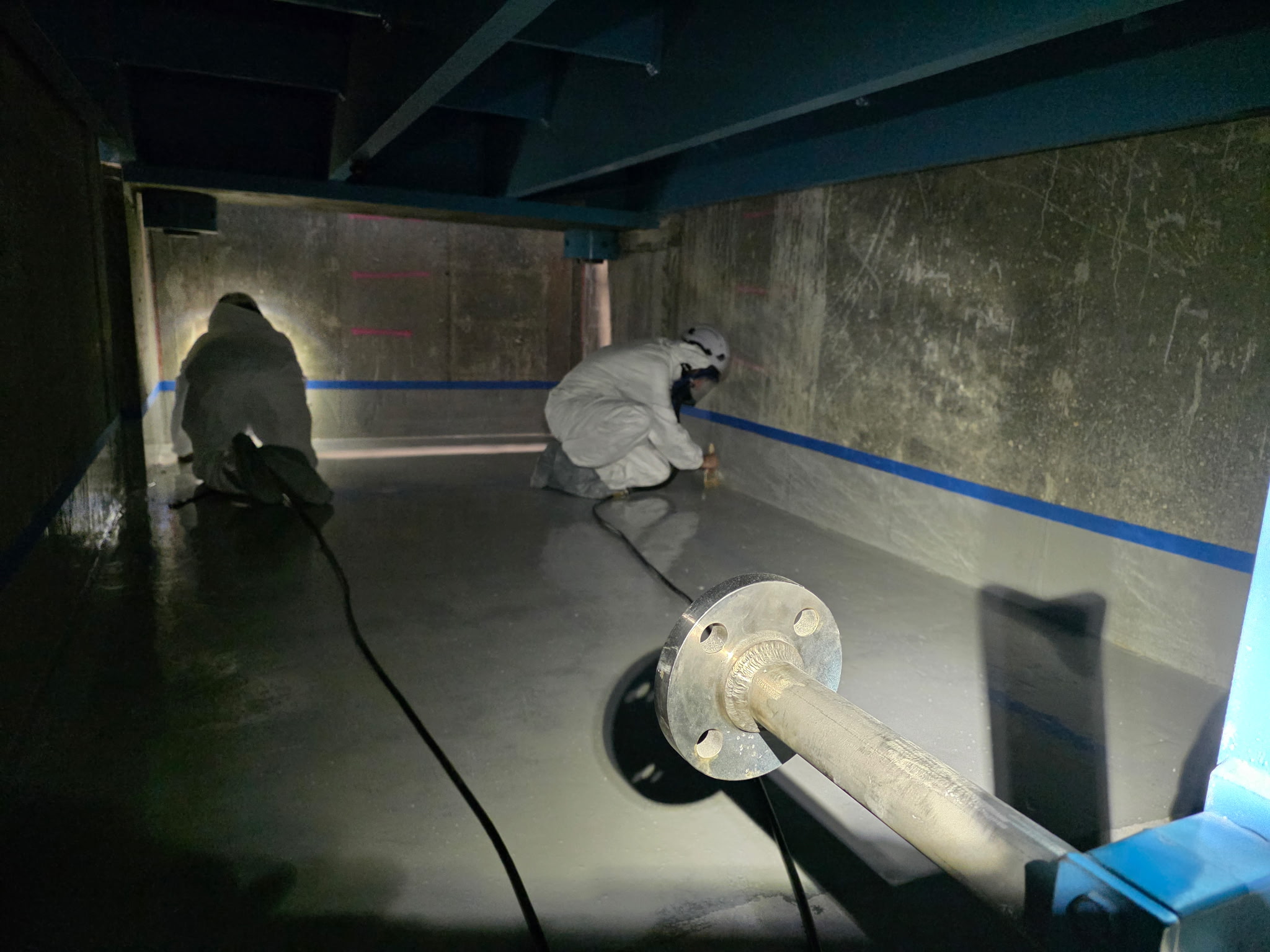
- Underground vaults — confined spaces housing pipes, valves, or equipment
- Transformer pads — dielectric fluid containment for electrical equipment
The challenge? These environments combine the worst conditions for flooring systems: chemical exposure, standing liquids, thermal cycling, and often confined-space installation constraints.
Containment System Options
Novolac Epoxy Systems
The workhorse of chemical containment. Novolac epoxies offer exceptional resistance to acids, bases, solvents, and fuels. Ideal for:
- Fuel storage areas
- Battery rooms
- Chemical processing
- Wastewater treatment
Vinyl Ester Systems
When you need the ultimate in chemical resistance—particularly against oxidizing acids and chlorinated solvents. Common in:
- Pulp and paper facilities
- Metal finishing operations
- Aggressive chemical storage
Polyurea/Polyurethane Hybrids
Fast-cure systems for situations where downtime is critical. These spray-applied systems can return to service in hours, not days. Best for:
- Emergency repairs
- Seasonal facility shutdowns
- Temperature-sensitive installations
Urethane Cement (Cementitious Urethane)
When thermal shock is a factor—steam cleaning, hot product spills, or extreme temperature swings. Urethane cement systems handle thermal cycling that would crack pure epoxies.
Confined Space Installation: The Hidden Challenge
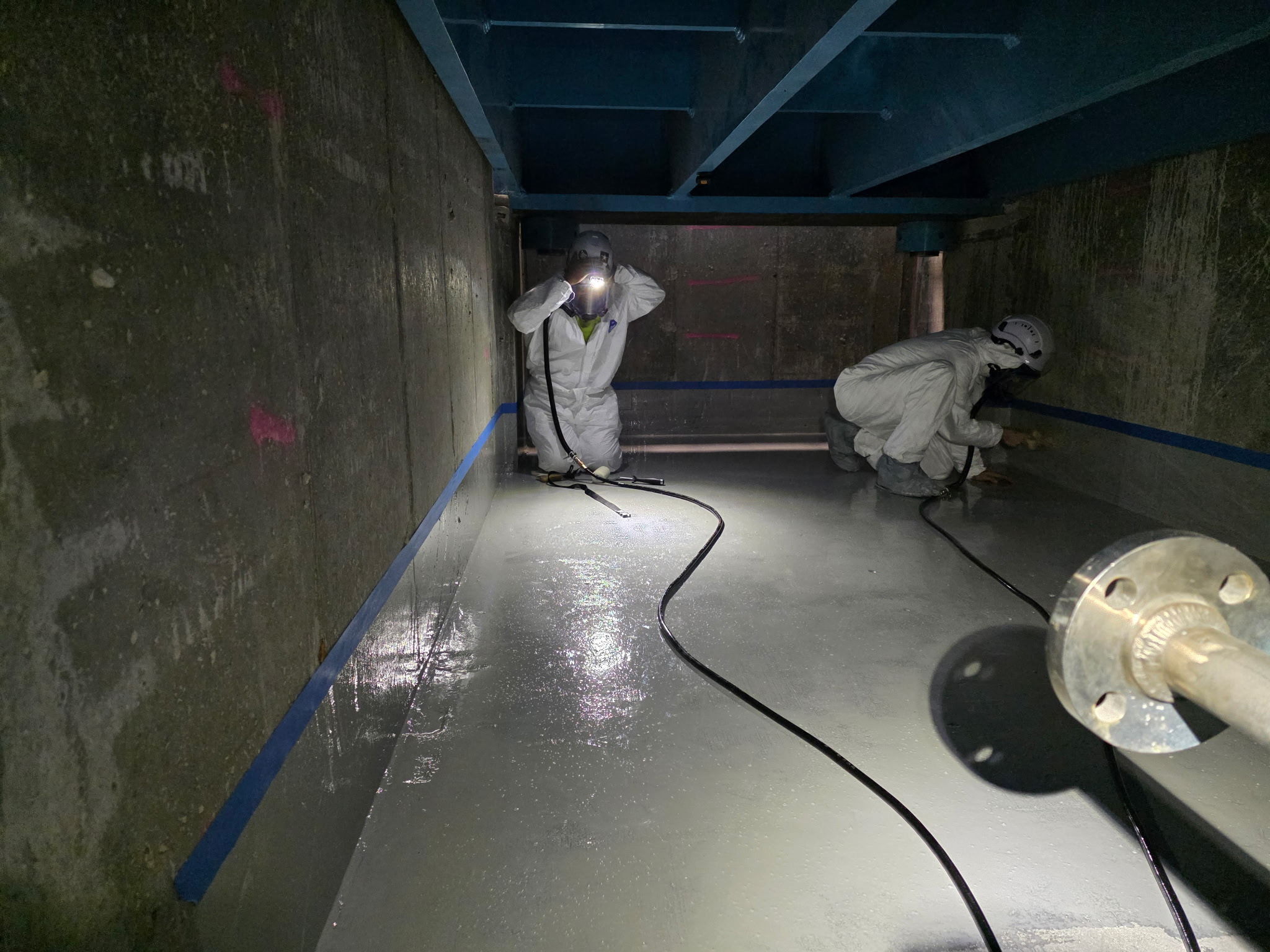
Many secondary containment installations involve confined spaces—underground vaults, interior tank linings, deep pits with limited access. This creates unique challenges:
Ventilation requirements — Solvent-based coatings require extensive air handling to maintain safe working conditions and proper cure.
Access limitations — Equipment, materials, and personnel must fit through manholes or limited openings.
Cure considerations — Low airflow and variable temperatures affect coating cure times and performance.
Safety protocols — Confined space entry permits, rescue plans, and continuous air monitoring add complexity.
We’ve developed specific protocols for confined-space coating work, including low-VOC formulations that reduce ventilation requirements and fast-cure systems that minimize worker exposure time.
What to Specify for Your Containment Project
When specifying secondary containment coatings, require your contractor to address:
- Chemical resistance data — Immersion test results for your specific chemicals, not just “chemical resistant” claims
- System thickness — Minimum mils specified, not just “as needed”
- Substrate preparation — Moisture testing, contamination removal, and profile requirements
- Cove base and termination details — Where the coating ends and how transitions are sealed
- Inspection and holiday testing — Spark testing to verify coating integrity
- Warranty terms — What’s actually covered and for how long
Summit’s Approach to Secondary Containment
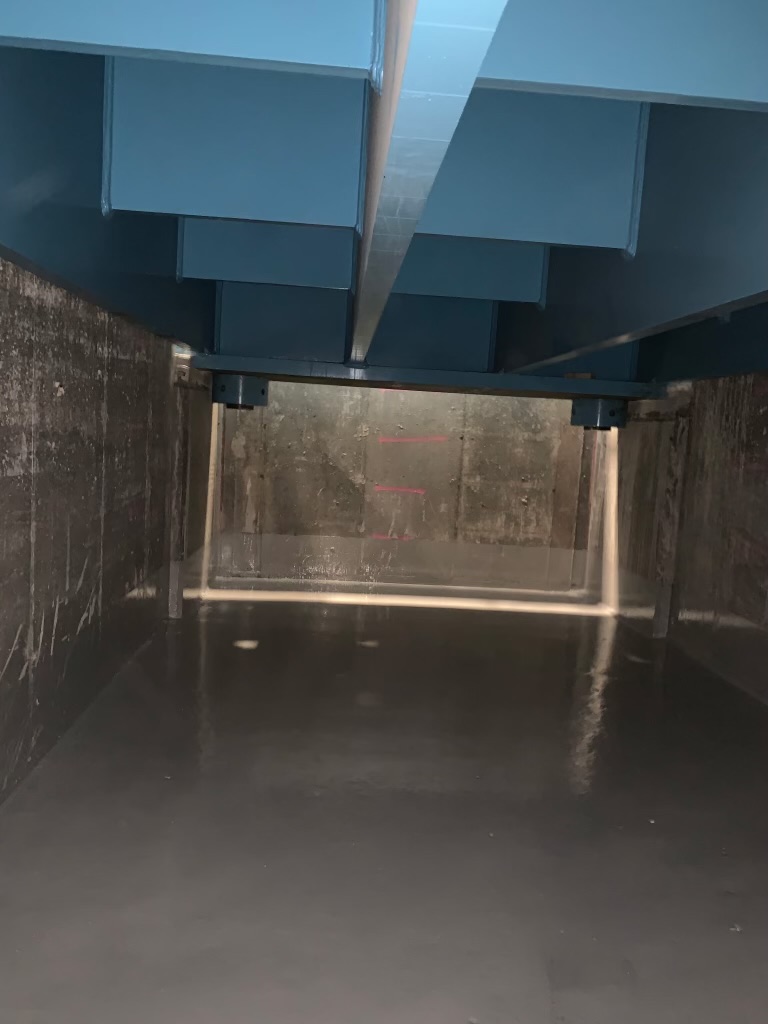
We’ve installed containment coatings in chemical plants, fuel terminals, manufacturing facilities, and wastewater treatment plants across Ohio, South Carolina, and North Carolina. Our approach includes:
- Chemical exposure analysis — We review your specific stored materials and select systems with documented resistance
- Substrate evaluation — Moisture testing, contamination assessment, and concrete condition review
- Confined space capability — Trained crews with proper certifications and equipment
- Holiday testing — Every containment installation is spark-tested to verify integrity
- Documentation — Complete installation records for regulatory compliance
When containment fails, everything behind it is at risk. We make sure it doesn’t fail.
Need secondary containment coating for your facility? Contact us for a site evaluation and chemical resistance specifications.
Summit Industrial Flooring — Improving Where You Stand