
Post Summary
What makes flooring for an automotive assembly plant like the Mercedes-Benz Sprinter van facility so demanding?
Automotive assembly plants place several distinct demands on a flooring system simultaneously, starting with continuous heavy vehicle traffic from forklifts, automated guided vehicles, and production equipment that never really stops during operating hours. Chemical exposure from oils, fuels, hydraulic fluids, and cleaning agents is a daily reality throughout the plant, and static control requirements add another layer, since the electronic components in modern vehicles can be damaged by electrostatic discharge that is invisible to the people working around it. Safety and visibility matter just as much, since clear pedestrian paths, designated work zones, and safety markings are essential in a facility where people and machinery share the same space constantly. On top of all of this, minimal downtime tolerance means flooring work has to happen around production schedules measured in minutes, not around a contractor’s own preferred timeline.
What specific flooring systems does Summit use throughout the Mercedes-Benz Vans facility, and where are they applied?
ESD flooring runs throughout sensitive assembly areas including trim line areas, quality control inspection zones, component staging areas, and electronics integration workstations, maintaining electrical resistance within strict specifications to safely dissipate static charges before they can damage sensitive components like engine control units or advanced driver assistance systems. Heavy duty resinous flooring, including high performance epoxy and urethane cement systems, covers the body shop, where welding sparks and heavy parts handling demand chemical resistant and impact tolerant surfaces, as well as the paint shop, assembly lines, and even break rooms and restrooms that still require industrial grade durability. Polished concrete handles the warehouse and logistics areas, offering an economical, durable surface that resists dusting and improves visibility through light reflectivity in large spaces. Novolac epoxy systems protect chemical storage areas specifically, since that chemistry resists the aggressive chemicals present in those spaces more effectively than standard epoxy.
How does Summit manage line striping and safety markings across a facility where people, vehicles, and automated equipment all share space?
Comprehensive line striping and safety markings run throughout the Mercedes-Benz Vans plant, including high visibility boundaries along pedestrian walkways, designated forklift traffic lanes, marked storage areas, safety zones around equipment, and work cell boundaries along the assembly lines. These markings serve a genuinely functional safety purpose in a facility where automated guided vehicles, forklifts, and production workers are all moving through the same physical space on a continuous basis. Clear visual communication through consistent striping reduces the chance of a person or vehicle ending up somewhere they should not be, which matters significantly given the scale of the facility and its production volume. This kind of safety infrastructure is a standard part of Summit’s automotive flooring work, not an optional add-on applied after the fact.
How does Summit complete major flooring projects at a facility that cannot afford significant production downtime?
Summit schedules major flooring work around planned shutdowns, including holiday breaks, model changeovers, and scheduled maintenance windows, turning those existing pauses in production into opportunities for larger installation projects. Large projects also get broken into phases, with sections completed overnight or over weekends rather than requiring an extended continuous shutdown that the plant cannot accommodate. When timelines are especially tight, fast cure systems like polyaspartic coatings allow a section of flooring to return to service quickly rather than requiring the multi day cure times that some standard systems need. Throughout all of this, Summit’s team coordinates directly with Mercedes-Benz’s plant engineering and maintenance staff, integrating with the facility’s own operations rather than working in isolation from them.
What has kept the Summit and Mercedes-Benz Vans partnership running for more than two decades?
The relationship began in 2002 and has grown steadily as the facility has expanded, with Summit completing dozens of projects over the years ranging from small repair work to major system installations. Summit attributes this longevity to a set of core values the company calls D.A.R.T., standing for driven, accountable, respectful, and team oriented, which shape how the crews approach every project at the facility rather than treating each job as a one-off transaction. Being driven means finding solutions rather than excuses when problems arise, being accountable means owning the work and standing behind it, being respectful means treating a client’s facility like Summit’s own, and being team oriented means integrating with a client’s operations instead of disrupting them. With 35 years in the industrial flooring business overall, Summit has seen technologies change and standards rise, but the company’s commitment to finishing a job on time, on budget, and with minimal disruption has remained consistent throughout the Mercedes-Benz partnership specifically.
When Mercedes-Benz chose Charleston, South Carolina for their Sprinter van assembly plant, they needed flooring partners who could meet the exacting standards of German automotive manufacturing. For over two decades, Summit Industrial Flooring has been that partner—installing, maintaining, and expanding the flooring systems that keep one of the world’s most advanced van production facilities running at peak efficiency.
The Challenge: World-Class Manufacturing Demands World-Class Flooring
Automotive assembly plants present some of the most demanding flooring environments in industrial manufacturing. The flooring systems must withstand:
- Heavy vehicle traffic – Forklifts, automated guided vehicles (AGVs), and production equipment operate continuously
- Chemical exposure – Oils, fuels, hydraulic fluids, and cleaning agents are daily realities
- Static control requirements – Electronic components in modern vehicles require ESD (electrostatic discharge) flooring to prevent costly damage
- Safety and visibility – Clear pedestrian paths, designated work zones, and safety markings are critical in a facility where humans and machinery work side by side
- Minimal downtime tolerance – Production schedules are measured in minutes, not days. Flooring work must happen around production, not instead of it.
The Mercedes-Benz Vans facility in Ladson, SC produces the iconic Sprinter van for the North American market. With over 1,300 employees and a production capacity of approximately 38,000 vehicles annually, every square foot of floor space plays a role in maintaining quality and efficiency.
Our Solution: A Comprehensive Flooring Partnership
Summit’s relationship with Mercedes-Benz Vans spans multiple facility areas and flooring systems. Here’s how we’ve addressed their diverse needs:
ESD Flooring for Sensitive Assembly Areas
Modern vehicles contain sophisticated electronic systems—from engine control units to infotainment systems to advanced driver assistance features. During assembly, these components are vulnerable to damage from electrostatic discharge. Even a small static shock invisible to humans can destroy sensitive microprocessors.
Summit has installed extensive ESD flooring systems throughout Mercedes-Benz’s assembly building, including:
- Trim line areas where interior components are installed
- Quality control inspection zones
- Component staging areas
- Electronics integration workstations
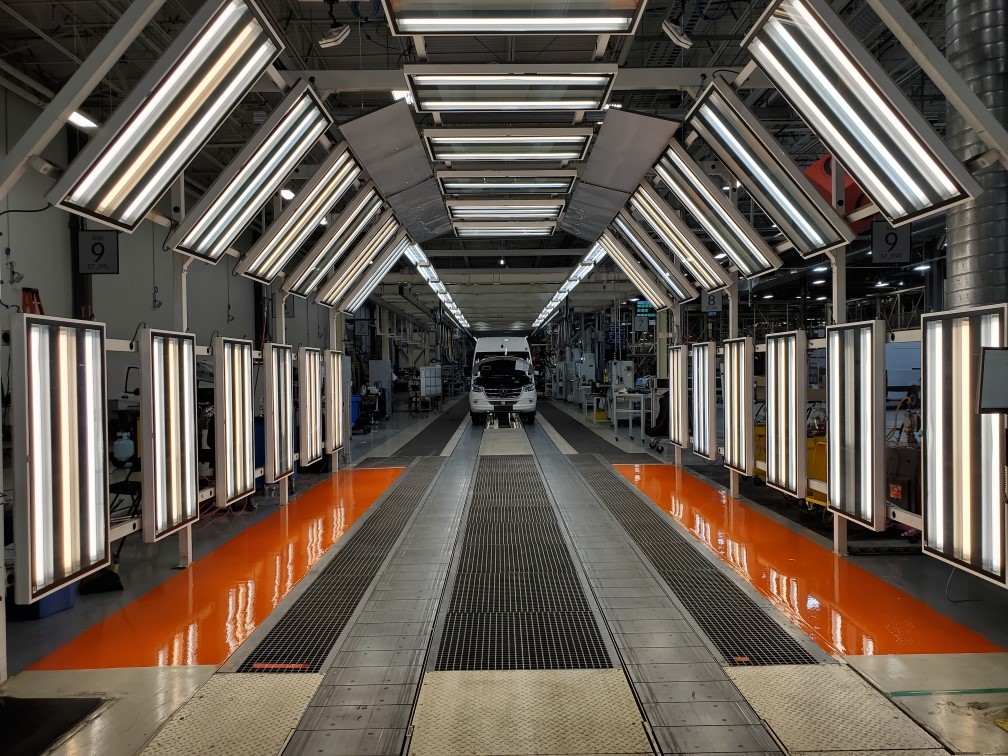
Our ESD systems maintain electrical resistance within strict specifications, safely dissipating static charges before they can damage sensitive components. The distinctive orange coloring in many areas provides both functional performance and visual identification of static-controlled zones.
Heavy-Duty Resinous Flooring
The majority of an automotive plant floor sees relentless abuse. High-performance epoxy and urethane cement systems provide the durability Mercedes-Benz requires:
- Body shop areas – Where welding sparks, grinding debris, and heavy parts handling demand chemical-resistant, impact-tolerant surfaces
- Paint shop – Clean, seamless surfaces that won’t generate dust or contaminants that could affect vehicle finishes
- Assembly lines – Where workers stand for extended periods and equipment rolls constantly
- Break rooms and restrooms – Employee comfort areas that still require industrial-grade durability
Polished Concrete for Logistics Areas
Warehouse and logistics spaces at the facility feature polished concrete flooring—an economical, durable solution perfect for areas with heavy forklift traffic and pallet storage. The polished surface resists dusting, cleans easily, and provides excellent light reflectivity to improve visibility in large spaces.
Line Striping and Safety Markings
In a facility where vehicles, pedestrians, and automated equipment share space, clear visual communication is essential. Summit has installed comprehensive line striping and safety markings throughout the plant:
- Pedestrian walkways with high-visibility boundaries
- Forklift traffic lanes
- Designated storage areas
- Safety zones around equipment
- Work cell boundaries on assembly lines
Containment and Specialty Areas
Automotive facilities require specialized flooring in areas like:
- Fuel handling areas – Secondary containment systems protect against spills
- Chemical storage – Novolac epoxy systems resist aggressive chemicals
- Wash bays – Slip-resistant surfaces with proper drainage
Working Around Production: The Summit Difference
Perhaps the most critical aspect of our work at Mercedes-Benz isn’t the flooring systems themselves—it’s how we install them. Automotive production doesn’t stop for flooring contractors. We’ve developed processes that allow us to:
- Work during scheduled shutdowns – Holiday breaks, model changeovers, and planned maintenance windows become opportunities for major flooring work
- Phase installations – Breaking large projects into manageable sections that can be completed overnight or on weekends
- Fast-cure systems – When timelines are tight, we specify polyaspartic and other rapid-return-to-service materials
- Coordinate with plant engineering – Our team integrates with Mercedes-Benz’s maintenance and engineering staff to minimize disruption
Two Decades of Partnership
Summit’s relationship with Mercedes-Benz Vans began in 2002 and has grown steadily as the facility has expanded and evolved. Over the years, we’ve completed dozens of projects ranging from small repair work to major system installations.
This longevity isn’t accidental. It reflects Summit’s core values—what we call D.A.R.T.:
- Driven – We find solutions, not excuses
- Accountable – We own our work and stand behind it
- Respectful – We treat client facilities like our own
- Team-Oriented – We integrate with client operations, not disrupt them
With 35 years in the industrial flooring business, Summit has seen technologies change, facilities evolve, and standards rise. What hasn’t changed is our commitment to getting the job done right—on time, on budget, and with minimal disruption to operations.
Automotive Flooring Expertise Across the Southeast
Our work at Mercedes-Benz Vans is part of Summit’s broader experience in automotive and manufacturing flooring. From our offices in Ohio, South Carolina, and North Carolina, we serve automotive suppliers, assembly plants, and manufacturing facilities throughout the Southeast and Midwest.
Every automotive flooring project brings unique challenges: different processes, different chemicals, different traffic patterns, different production schedules. Our experience across dozens of facilities means we’ve likely solved your specific challenge before—and we bring that knowledge to every new project.
Ready to Discuss Your Automotive Flooring Project?
If your manufacturing facility needs flooring that performs under demanding conditions, Summit Industrial Flooring has the experience and capabilities to deliver. From initial consultation through installation and ongoing maintenance, we’re the partner that automotive manufacturers trust.
Contact Summit today to discuss your facility’s flooring needs. We’ll provide an honest assessment, realistic timelines, and a solution engineered for your specific requirements.
Key Points
Why do modern automotive assembly plants require ESD flooring in specific areas of the facility?
- Electronic components in modern vehicles are highly sensitive to static discharge. Engine control units, infotainment systems, and advanced driver assistance features can all be damaged by a static shock too small for a person to even notice.
- ESD flooring works by maintaining electrical resistance within strict specifications. This allows the flooring to safely dissipate static charges before they build up enough to damage sensitive components during assembly.
- Coverage extends across every point where sensitive components are handled. Trim line areas, quality control inspection zones, component staging areas, and electronics integration workstations at the Mercedes-Benz Vans facility all rely on ESD flooring for this reason.
- Visual identification adds a functional layer beyond the flooring’s electrical properties. The distinctive orange coloring used in many ESD areas helps workers immediately recognize which zones are static controlled.
- Getting ESD flooring wrong carries real financial consequences. A facility that installs a generic floor in an area handling sensitive electronics risks costly component damage that a properly specified ESD system would have prevented.
- Summit Industrial Flooring has installed ESD systems throughout the Mercedes-Benz Vans assembly building for exactly this reason. That direct experience with ESD specifications in a demanding automotive environment reflects the kind of specialized knowledge Summit brings to electronics manufacturing and data center flooring projects elsewhere as well.
How do heavy duty resinous flooring systems hold up across the different zones of an automotive assembly plant?
- Body shop areas demand chemical resistant, impact tolerant surfaces. Welding sparks, grinding debris, and heavy parts handling all place significant physical stress on the floor in this part of the plant.
- Paint shop flooring has to stay seamless and clean by design. A surface that generates dust or contaminants in this area risks affecting the quality of the vehicle finishes being applied nearby.
- Assembly line flooring supports both constant equipment movement and worker comfort. Workers standing for extended periods and equipment rolling constantly both place different but equally important demands on the same floor.
- Even employee spaces require industrial grade durability. Break rooms and restrooms in a facility this size still see enough traffic and use that standard commercial flooring would not hold up the same way.
- Epoxy and urethane cement systems each get applied where their specific strengths matter most. Matching the right resinous system to each zone’s actual demands, rather than applying one system throughout, is what makes this approach work across such varied conditions.
- Summit Industrial Flooring’s work across every zone of the Mercedes-Benz Vans plant reflects this kind of system specific matching. That same approach, choosing the right resinous system for each area’s actual demands, is what Summit brings to automotive and manufacturing facilities throughout the Southeast and Midwest.
What role does polished concrete play in a facility that also relies heavily on resinous and ESD flooring systems?
- Warehouse and logistics areas have different demands than assembly zones. Heavy forklift traffic and pallet storage call for a durable, economical surface rather than the specialized chemical or static resistant properties needed elsewhere in the plant.
- Polished concrete resists dusting in a way that matters for a large facility. A dust generating floor surface in a high traffic warehouse area creates ongoing cleaning demands that polished concrete largely avoids.
- Light reflectivity improves safety and visibility in large spaces. The polished surface’s reflective quality helps illuminate expansive warehouse areas more effectively, which supports safer operation of forklifts and other equipment.
- Cost effectiveness makes polished concrete a practical choice for large square footage. Warehouse and logistics areas often cover significant floor space, making an economical solution like polished concrete a sensible match for the budget realities of covering that much area.
- Choosing the right system for each zone reflects an overall facility strategy rather than a single blanket decision. Polished concrete in logistics areas, paired with ESD and resinous systems elsewhere, shows how a well planned flooring strategy adapts to each part of a facility’s actual function.
- Summit Industrial Flooring applies this same zone specific thinking across its warehouse and distribution center projects generally. The polished concrete work at Mercedes-Benz Vans reflects the same approach Summit brings to logistics facilities throughout the region.
How does Summit coordinate flooring installation with a production schedule that cannot tolerate significant downtime?
- Planned shutdowns become scheduling opportunities rather than obstacles. Holiday breaks, model changeovers, and scheduled maintenance windows all give Summit a window to complete larger flooring projects without interfering with active production.
- Phased installation breaks large projects into manageable pieces. Completing sections overnight or over weekends allows significant flooring work to happen without requiring an extended shutdown the plant cannot accommodate.
- Fast cure systems address the tightest timelines. Polyaspartic and other rapid return to service materials let a section of flooring go back into use quickly when a longer cure time simply is not an option.
- Direct coordination with plant engineering keeps disruption to a minimum. Integrating with Mercedes-Benz’s own maintenance and engineering staff allows Summit’s crews to work within the facility’s existing operational rhythm rather than around it.
- This approach requires flooring expertise combined with genuine operational flexibility. Knowing which materials and techniques work under time pressure is only useful if a contractor can also plan and execute around a client’s actual production calendar.
- Summit Industrial Flooring built this capability specifically because production facilities cannot stop for flooring work. That same scheduling discipline and material knowledge apply to any manufacturing client whose operations cannot afford extended downtime, not just the Mercedes-Benz Vans facility.
What do Summit’s D.A.R.T. values mean in practice, and how have they shaped a twenty plus year partnership?
- Being driven means finding solutions rather than excuses when problems come up. Construction and installation work inevitably surfaces unexpected issues, and this value shapes how Summit’s crews respond when that happens on site.
- Being accountable means standing behind the work after it is finished. Owning the outcome of a project, rather than deflecting responsibility if something underperforms, is what accountability looks like in day to day practice.
- Being respectful means treating a client’s facility like Summit’s own. That mindset shapes how crews handle a working automotive plant, where careless work could disrupt operations well beyond the flooring itself.
- Being team oriented means integrating with a client’s operations rather than working around them. This value directly supports the kind of coordination with plant engineering that makes production friendly scheduling possible.
- These values scale from a single repair job to a two decade partnership. The relationship with Mercedes-Benz Vans began in 2002 and has grown through dozens of projects, which reflects consistent application of these principles over time rather than a one-time sales pitch.
- Summit Industrial Flooring applies these same D.A.R.T. values across every client relationship, not just this one. With 35 years in the industrial flooring business, Summit has carried this same approach into automotive, manufacturing, and industrial facilities throughout Ohio, South Carolina, and North Carolina.
What does this case study reveal about how Summit approaches automotive flooring projects more broadly?
- Different zones within a single facility require genuinely different flooring solutions. ESD flooring, heavy duty resinous systems, polished concrete, and specialty containment areas all coexist within the Mercedes-Benz Vans plant, each addressing a distinct operational need.
- Safety infrastructure like line striping is treated as a core part of the work, not an afterthought. Pedestrian walkways, forklift lanes, and safety zones throughout the facility reflect a level of attention that goes beyond simply installing a durable surface.
- Specialty areas like fuel handling and chemical storage require targeted systems. Secondary containment for fuel handling and novolac epoxy for chemical storage show how specific risks call for specific material solutions rather than a general purpose coating.
- Production continuity shapes the entire installation strategy. The scheduling discipline built around shutdowns, phased work, and fast cure materials is as important to the outcome as the flooring materials themselves.
- Decades of experience across many facilities compounds into faster, better solutions for new clients. Summit’s work across dozens of automotive and manufacturing facilities means many challenges a new client faces have likely already been solved somewhere else in that portfolio.
- Summit Industrial Flooring brings this same depth of experience to any automotive or manufacturing facility ready to discuss a flooring project. From initial consultation through installation and ongoing maintenance, Summit offers an honest assessment, realistic timelines, and a solution engineered for a facility’s specific requirements, the same approach that has kept the Mercedes-Benz Vans partnership running for more than twenty years.