
Epoxy vs Urethane Cement Flooring: Which Is Right for Your Industrial Facility?

Sumind
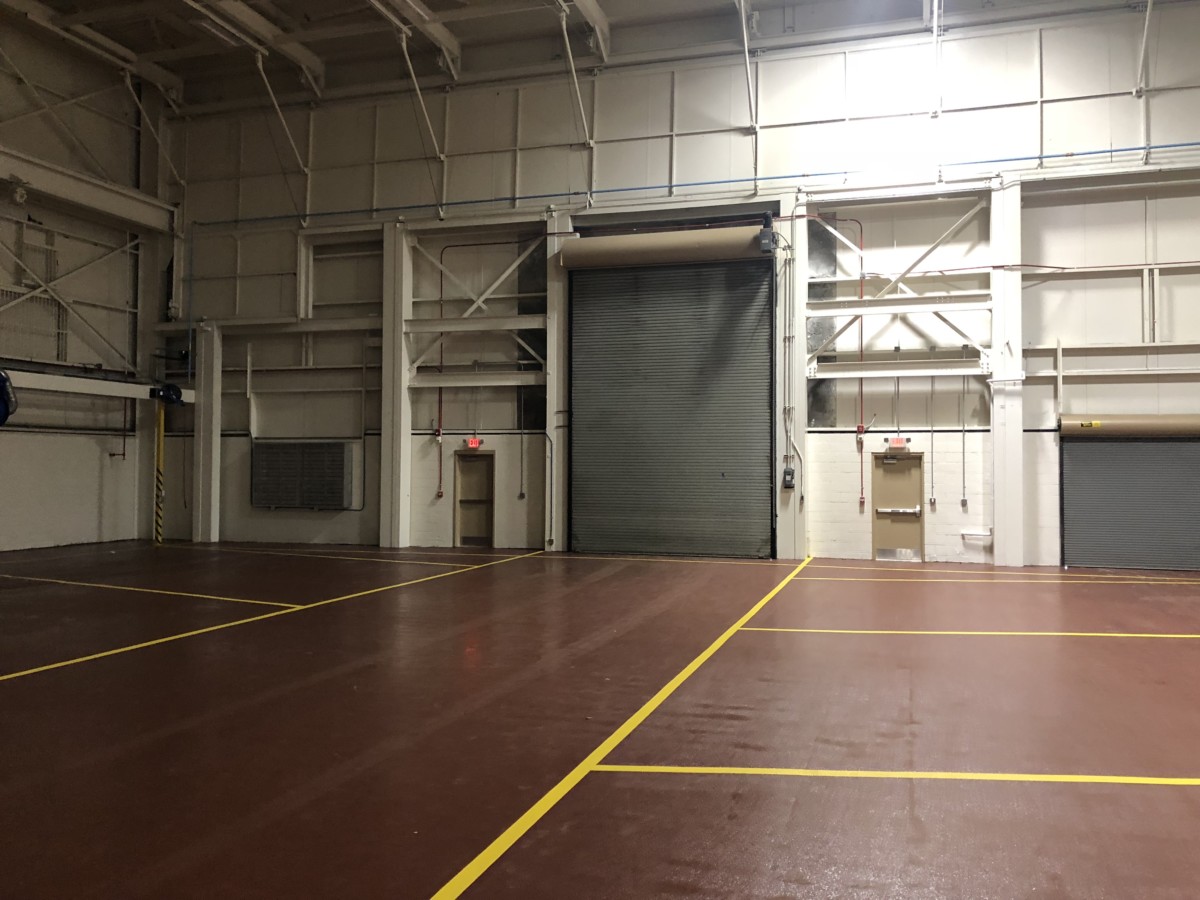
Industrial warehouse interior with red epoxy floor and yellow safety striping, featuring roll-up loading doors and durable industrial flooring designed for logistics, manufacturing, and high-traffic warehouse environments.

Post Summary

What is the fundamental difference between epoxy and urethane cement flooring systems?

Both epoxy and urethane cement are resinous flooring systems, meaning they are applied as liquids that cure into a solid, seamless surface bonded to concrete, and both significantly outperform bare concrete. Epoxy is a two component system made of a resin and a hardener that chemically react to form a hard, durable surface, typically applied as a coating. Urethane cement is a three component system combining polyurethane resin, hardener, and a cement or aggregate blend, which produces a much thicker floor, typically 1/4 inch to 3/8 inch, that combines the flexibility of polyurethane with the compressive strength of cement. That difference in composition and thickness is what drives most of the performance differences between the two systems, particularly around temperature resistance and impact durability.

Which system handles temperature extremes and thermal shock better, and why does that matter?

Urethane cement withstands a significantly wider temperature range, from negative 40 degrees Fahrenheit up to 250 degrees Fahrenheit, compared to standard epoxy formulations that generally handle negative 20 to 140 degrees Fahrenheit. This matters most for facilities dealing with thermal shock conditions, such as hot water washdowns or steam cleaning, since standard epoxy is vulnerable to delamination when rapid temperature changes occur, while urethane cement resists that kind of damage without cracking or lifting. Facilities operating cold storage, freezers, or areas near ovens face a similar consideration, since extreme heat or cold can make standard epoxy brittle or soft depending on the direction of the temperature swing. For any facility where thermal cycling is a regular part of daily operations, urethane cement is generally the stronger choice specifically because of this resistance.

How do epoxy and urethane cement compare on chemical resistance, cost, and appearance?

Both systems offer good to excellent chemical resistance against the range of chemicals, oils, and solvents common in manufacturing environments, but urethane cement pulls ahead specifically when organic acids, fats, or blood are regularly present, handling those substances better than standard epoxy. On cost, epoxy is generally the more economical option, while urethane cement typically runs 2 to 3 times the cost of a standard epoxy system, reflecting its more complex three component composition and thicker application. Epoxy also offers far more aesthetic flexibility, available in virtually unlimited colors, patterns, and finishes from solid colors to decorative flake systems, while urethane cement is limited to fewer colors and tends toward a rougher, more industrial finish, though that texture does improve slip resistance. These tradeoffs mean the better system often depends on which factor, cost, chemical exposure, or appearance, matters most for a specific facility.

What facility types and industries tend to be best suited for each flooring system?

Epoxy excels in manufacturing facilities, warehouses and distribution centers, automotive shops and showrooms, aircraft hangars, commercial kitchens with proper slip resistant additives, and retail or showroom spaces, where its cost effectiveness and design flexibility are significant advantages. Urethane cement is the stronger fit for food and beverage processing plants, pharmaceutical manufacturing, commercial kitchens and bakeries, meat and poultry processing, dairy facilities, breweries and wineries, chemical processing plants, and cold storage or freezer environments, all of which involve some combination of thermal cycling, harsh chemical exposure, or strict regulatory requirements. Regulatory considerations play a real role in this decision too, since food processing, pharmaceutical, and chemical facilities often face specific flooring requirements, and urethane cement is frequently specified by USDA, FDA, and other regulatory bodies for food contact environments. Matching the flooring system to the facility’s actual operating conditions, rather than defaulting to one system across every application, produces the best long term result.

Why does surface preparation matter more than the choice between epoxy and urethane cement?

Both epoxy and urethane cement require properly prepared concrete to reach their full performance potential, and that preparation typically involves mechanical work such as shot blasting, diamond grinding, or scarifying to create a surface profile the coating can actually bond to. When that preparation step gets skipped or done poorly, even the right flooring system for a given facility can fail prematurely, regardless of how well suited that system was on paper. This is why the coating choice, while important, is often described as mattering less than the quality of the surface preparation underneath it. Facility managers evaluating flooring contractors should pay as much attention to how a contractor handles surface preparation as they do to which specific coating system gets proposed for the job.

Choosing the right industrial flooring system is one of the most important decisions a facility manager can make. Get it right, and your floors will perform flawlessly for decades. Get it wrong, and you’re looking at costly repairs, downtime, and safety hazards within just a few years.

At Summit Industrial Flooring, we’ve installed millions of square feet of both epoxy and urethane cement flooring over our 35+ years in business. We’ve seen what works, what fails, and—most importantly—why. This guide will help you understand the key differences between these two popular industrial flooring systems so you can make the right choice for your facility.

Understanding Industrial Flooring Systems

Before diving into the comparison, it’s important to understand that both epoxy and urethane cement are resinous flooring systems—meaning they’re applied as liquids that cure to form a solid, seamless surface. They’re both vastly superior to bare concrete, but they serve different purposes and excel in different environments.

Epoxy Flooring: The Industry Workhorse

Epoxy flooring has been the go-to industrial flooring solution for decades, and for good reason. It’s versatile, cost-effective, and performs exceptionally well in a wide range of applications.

What Is Epoxy Flooring?

Epoxy is a two-component system consisting of a resin and a hardener. When mixed, these components undergo a chemical reaction that creates a hard, durable surface that bonds directly to properly prepared concrete.

Key Benefits of Epoxy Flooring

  • Excellent Chemical Resistance: Epoxy resists a wide range of chemicals, oils, and solvents commonly found in manufacturing environments.
  • High Durability: A properly installed epoxy floor can last 10-20+ years with minimal maintenance.
  • Aesthetic Flexibility: Available in virtually unlimited colors, patterns, and finishes—from solid colors to decorative flake systems.
  • Cost-Effective: Generally the most economical option for industrial flooring, especially for larger facilities.
  • Easy to Clean: Seamless surface eliminates cracks and crevices where dirt and bacteria can hide.
  • Customizable Properties: Can be formulated for specific needs—anti-static (ESD), slip-resistant, high-gloss, or matte finish.

Where Epoxy Excels

  • Manufacturing facilities
  • Warehouses and distribution centers
  • Automotive shops and showrooms
  • Aircraft hangars
  • Commercial kitchens (with proper slip-resistant additives)
  • Retail and showroom spaces

Limitations of Epoxy

Epoxy isn’t perfect for every situation. Its main weaknesses include:

  • Temperature Sensitivity: Standard epoxy can yellow under UV exposure and may become brittle in extreme cold or soft in extreme heat.
  • Thermal Shock Vulnerability: Rapid temperature changes (like hot water washdowns) can cause delamination.
  • Longer Cure Times: Most epoxy systems require 24-72 hours before light traffic and up to 7 days for full cure.

Urethane Cement Flooring: The Heavy-Duty Solution

When epoxy isn’t tough enough, urethane cement steps in. Also called “cementitious urethane” or “urethane mortar,” this flooring system combines the flexibility of polyurethane with the compressive strength of cement to create an incredibly durable surface.

What Is Urethane Cement Flooring?

Urethane cement is a three-component system: polyurethane resin, hardener, and cement/aggregate blend. This combination creates a flooring system that’s typically 1/4″ to 3/8″ thick—significantly thicker than standard epoxy coatings.

Key Benefits of Urethane Cement Flooring

  • Extreme Temperature Resistance: Withstands temperatures from -40°F to 250°F, making it ideal for thermal shock environments.
  • Superior Thermal Shock Resistance: Won’t crack or delaminate from hot water washdowns, steam cleaning, or sudden temperature changes.
  • Exceptional Chemical Resistance: Handles organic acids, fats, and blood better than standard epoxy.
  • Impact and Abrasion Resistance: The added thickness and cement content provide superior impact resistance.
  • Moisture Tolerance: Can be installed on concrete with higher moisture levels than epoxy.
  • Long Service Life: Often lasts 20-25+ years in demanding environments.

Where Urethane Cement Excels

Limitations of Urethane Cement

  • Higher Cost: Typically 2-3x the cost of standard epoxy systems.
  • Limited Aesthetic Options: Available in fewer colors and finishes than epoxy.
  • Skilled Installation Required: More complex installation process requires experienced applicators.
  • Texture: Often has a rougher, more industrial finish (though this improves slip resistance).

Head-to-Head Comparison

Here’s how these two systems stack up against each other:

Temperature Resistance:
• Epoxy: -20°F to 140°F (standard formulations)
• Urethane Cement: -40°F to 250°F ✓

Thermal Shock:
• Epoxy: Vulnerable to damage
• Urethane Cement: Excellent resistance ✓

Chemical Resistance:
• Epoxy: Good to excellent
• Urethane Cement: Excellent, especially for organic acids ✓

Initial Cost:
• Epoxy: Lower ✓
• Urethane Cement: Higher

Aesthetic Options:
• Epoxy: Wide variety ✓
• Urethane Cement: Limited

Cure Time:
• Epoxy: 24-72 hours light traffic
• Urethane Cement: 12-24 hours light traffic ✓

Service Life:
• Epoxy: 10-20 years
• Urethane Cement: 20-25+ years ✓

Making the Right Choice: Questions to Ask

When deciding between epoxy and urethane cement, consider these factors:

1. What’s Your Operating Temperature?

If your facility involves hot water washdowns, steam cleaning, or operates in extreme temperatures (cold storage, ovens nearby), urethane cement is likely your best choice.

2. What Chemicals Will the Floor Contact?

Both systems handle most industrial chemicals well, but if you’re dealing with organic acids (citric, lactic, acetic), fats, or blood, urethane cement provides superior protection.

3. What’s Your Budget?

If budget is a primary concern and your facility doesn’t face extreme conditions, epoxy provides excellent value. Remember, though, that a floor that fails prematurely costs more in the long run than investing in the right system upfront.

4. How Important Are Aesthetics?

If branding, customer impressions, or a specific look matters (showrooms, lobbies, visible production areas), epoxy offers more design flexibility.

5. What Industry Regulations Apply?

Food processing, pharmaceutical, and chemical facilities often have specific flooring requirements. Urethane cement is frequently specified by USDA, FDA, and other regulatory bodies for food-contact environments.

The Hidden Factor: Surface Preparation

Here’s something many flooring contractors won’t tell you: the flooring system matters less than the surface preparation.

Both epoxy and urethane cement require properly prepared concrete to achieve their full potential. This typically involves mechanical preparation—shot blasting, diamond grinding, or scarifying—to create a profile that the coating can bond to.

At Summit, we own all our own surface preparation equipment. We don’t cut corners, and we don’t skip steps. That’s why our floors last while competitors’ floors peel up within a few years.

Learn more about our epoxy flooring systems →

Why Experience Matters

After 35+ years of installing industrial floors across Ohio, South Carolina, and North Carolina, we’ve learned that choosing the right flooring system is only half the battle. Proper installation by experienced crews makes the difference between a floor that lasts two years and one that lasts twenty.

We’ve installed flooring for some of the most demanding facilities in America—from pharmaceutical clean rooms to automotive plants to food processing facilities. We’ve seen what works, and we’ve seen what doesn’t.

Not Sure Which System You Need?

Every facility is different. What works for a warehouse won’t necessarily work for a food processing plant. That’s why we always start with a thorough assessment of your specific needs, operating conditions, and budget.

Ready to discuss your project? Contact Summit Industrial Flooring for a free consultation. We’ll help you choose the right flooring system—whether it’s epoxy, urethane cement, or one of our other industrial flooring solutions.

📞 Ohio/Kentucky: (937) 913-8090
📞 South Carolina: (843) 530-6800
📞 North Carolina: (919) 535-9942

Request a Free Estimate →

Key Points

What makes epoxy flooring the long standing default choice for a wide range of industrial facilities?

  • Its two component chemistry creates a genuinely durable bonded surface. When the resin and hardener react, the result is a hard surface that bonds directly to properly prepared concrete, producing a floor that can perform well for a decade or more with minimal maintenance.
  • Chemical resistance covers most common manufacturing exposures. Epoxy resists a wide range of chemicals, oils, and solvents typically found in manufacturing environments, which covers the majority of everyday industrial use cases.
  • Aesthetic flexibility sets epoxy apart from most other industrial flooring systems. Virtually unlimited colors, patterns, and finishes, from solid colors to decorative flake systems, make epoxy a strong choice anywhere appearance matters alongside performance.
  • Cost effectiveness makes epoxy accessible for larger facilities. As generally the most economical industrial flooring option, epoxy allows facilities to cover large square footage without the cost premium that urethane cement carries.
  • Customizable formulations extend epoxy’s usefulness across specialized needs. Anti-static, slip resistant, high gloss, or matte finish formulations mean epoxy can be tailored to specific functional requirements beyond basic durability.
  • Summit Industrial Flooring installs epoxy systems matched to the actual demands of a facility. With more than 35 years of experience installing millions of square feet of epoxy flooring, Summit evaluates each facility’s specific conditions before recommending a formulation rather than defaulting to a one size fits all approach.

What specific limitations should facility managers understand before choosing standard epoxy flooring?

  • Temperature sensitivity can affect performance in certain environments. Standard epoxy can yellow under UV exposure and may become brittle in extreme cold or soft in extreme heat, which matters for facilities operating outside a moderate temperature range.
  • Thermal shock is epoxy’s most significant vulnerability. Rapid temperature changes, such as hot water washdowns, can cause delamination in standard epoxy systems, making it a poor fit for facilities with frequent thermal cycling.
  • Cure times require realistic project planning. Most epoxy systems need 24 to 72 hours before light traffic and up to 7 days for a full cure, which needs to be factored into any installation timeline.
  • These limitations do not disqualify epoxy, they define its proper use case. Facilities without extreme temperature swings or heavy thermal shock exposure can still get excellent, long lasting performance from a properly installed epoxy system.
  • Understanding these tradeoffs upfront prevents premature floor failure. A facility that installs epoxy in a thermal shock environment without accounting for this limitation risks the kind of delamination that leads to costly repairs within just a few years.
  • Summit Industrial Flooring identifies these risk factors before recommending a system. Rather than installing epoxy by default, Summit assesses a facility’s actual operating conditions, including temperature swings and washdown frequency, to determine whether epoxy or a more resistant system like urethane cement is the right fit.

What makes urethane cement the right choice for facilities with extreme temperature or chemical demands?

  • Its temperature range far exceeds what standard epoxy can handle. Withstanding temperatures from negative 40 degrees Fahrenheit to 250 degrees Fahrenheit makes urethane cement suitable for environments epoxy simply cannot handle reliably.
  • Thermal shock resistance is its defining advantage. Urethane cement will not crack or delaminate from hot water washdowns, steam cleaning, or sudden temperature changes, which is exactly where standard epoxy tends to fail.
  • Chemical resistance extends beyond what epoxy typically handles well. Organic acids, fats, and blood are all handled better by urethane cement than by standard epoxy, which matters significantly in food and beverage or pharmaceutical settings.
  • Added thickness delivers superior impact and abrasion resistance. The 1/4 inch to 3/8 inch thickness, combined with the cement content, gives urethane cement a level of physical durability that thin coating systems cannot match.
  • Moisture tolerance opens up installation on more challenging substrates. Urethane cement can be installed on concrete with higher moisture levels than epoxy requires, which matters in facilities where moisture vapor transmission is an ongoing substrate concern.
  • Summit Industrial Flooring brings the specialized installation expertise urethane cement requires. Because urethane cement involves a more complex installation process, Summit’s experienced crews and 35 plus years of industrial flooring work make the difference between a system that performs as designed and one installed incorrectly.

What tradeoffs come with choosing urethane cement over standard epoxy?

  • Cost is the most immediate tradeoff to consider. Urethane cement typically runs 2 to 3 times the cost of a standard epoxy system, which needs to be weighed against the performance demands of the facility.
  • Aesthetic options are more limited than with epoxy. Urethane cement is available in fewer colors and finishes, which matters for facilities where appearance is a significant consideration alongside performance.
  • Installation requires genuinely skilled, experienced crews. The more complex three component installation process means urethane cement performs best when installed by applicators with real experience in this specific system.
  • Texture is often rougher than a typical epoxy finish. While this can read as a limitation aesthetically, the rougher, more industrial texture actually improves slip resistance in many demanding environments.
  • These tradeoffs are worth it in the right application. For facilities facing thermal shock, harsh organic acid exposure, or strict food and pharmaceutical regulations, the added cost and complexity of urethane cement is justified by the performance and longevity it delivers.
  • Summit Industrial Flooring helps facilities weigh these tradeoffs against their actual budget and conditions. A free consultation with Summit evaluates whether the added cost of urethane cement is justified for a specific facility, rather than assuming the more expensive system is always the safer choice.

Why does surface preparation matter more to a floor’s long term performance than the choice between epoxy and urethane cement?

  • Both systems depend entirely on properly prepared concrete. Neither epoxy nor urethane cement can reach its full performance potential without a surface profile the coating can actually bond to.
  • Mechanical preparation methods create that necessary surface profile. Shot blasting, diamond grinding, or scarifying are the standard methods used to prepare concrete before either flooring system is applied.
  • Skipping or rushing this step undermines even the right material choice. A facility that selects the correct flooring system for its conditions can still experience premature failure if the underlying surface preparation was inadequate.
  • This factor explains a significant share of industrial floor failures. Roughly 80 percent of industrial floor failures trace back to inadequate surface preparation rather than a flaw in the coating material itself.
  • Owning the preparation equipment changes how thoroughly the work gets done. A contractor that owns its own surface preparation equipment has less incentive to cut corners than one relying on rented equipment or subcontracted prep work.
  • Summit Industrial Flooring owns its own surface preparation equipment for exactly this reason. By handling surface preparation with its own crews and equipment rather than subcontracting the step, Summit avoids the shortcuts that cause competitors’ floors to peel up within just a few years.

How should a facility manager approach the decision between epoxy and urethane cement for a specific project?

  • Operating temperature is the first question worth answering. Facilities involving hot water washdowns, steam cleaning, or extreme temperatures are strong candidates for urethane cement over standard epoxy.
  • Chemical exposure narrows the decision further. Facilities dealing with organic acids, fats, or blood on a regular basis benefit from urethane cement’s superior resistance to those specific substances.
  • Budget remains a legitimate factor, but not in isolation. Epoxy provides excellent value when a facility’s conditions do not demand urethane cement’s extreme performance, though a floor that fails prematurely ultimately costs more than the right system installed upfront.
  • Aesthetic priorities can tip the decision toward epoxy. Showrooms, lobbies, and visible production areas where branding or customer impressions matter often favor epoxy’s wider design flexibility.
  • Regulatory requirements can settle the decision outright. Food processing, pharmaceutical, and chemical facilities often need to meet USDA, FDA, or other regulatory specifications that frequently point directly to urethane cement.
  • Summit Industrial Flooring starts every project with an assessment of these exact factors. Rather than defaulting to one system, Summit evaluates operating temperature, chemical exposure, budget, aesthetics, and regulatory requirements together, then recommends epoxy, urethane cement, or another industrial flooring solution based on what the facility actually needs.

Leave a Reply

Your email address will not be published. Required fields are marked *